Description
Handmade Natural Bug Hotel | Pretoria East Craftsmanship
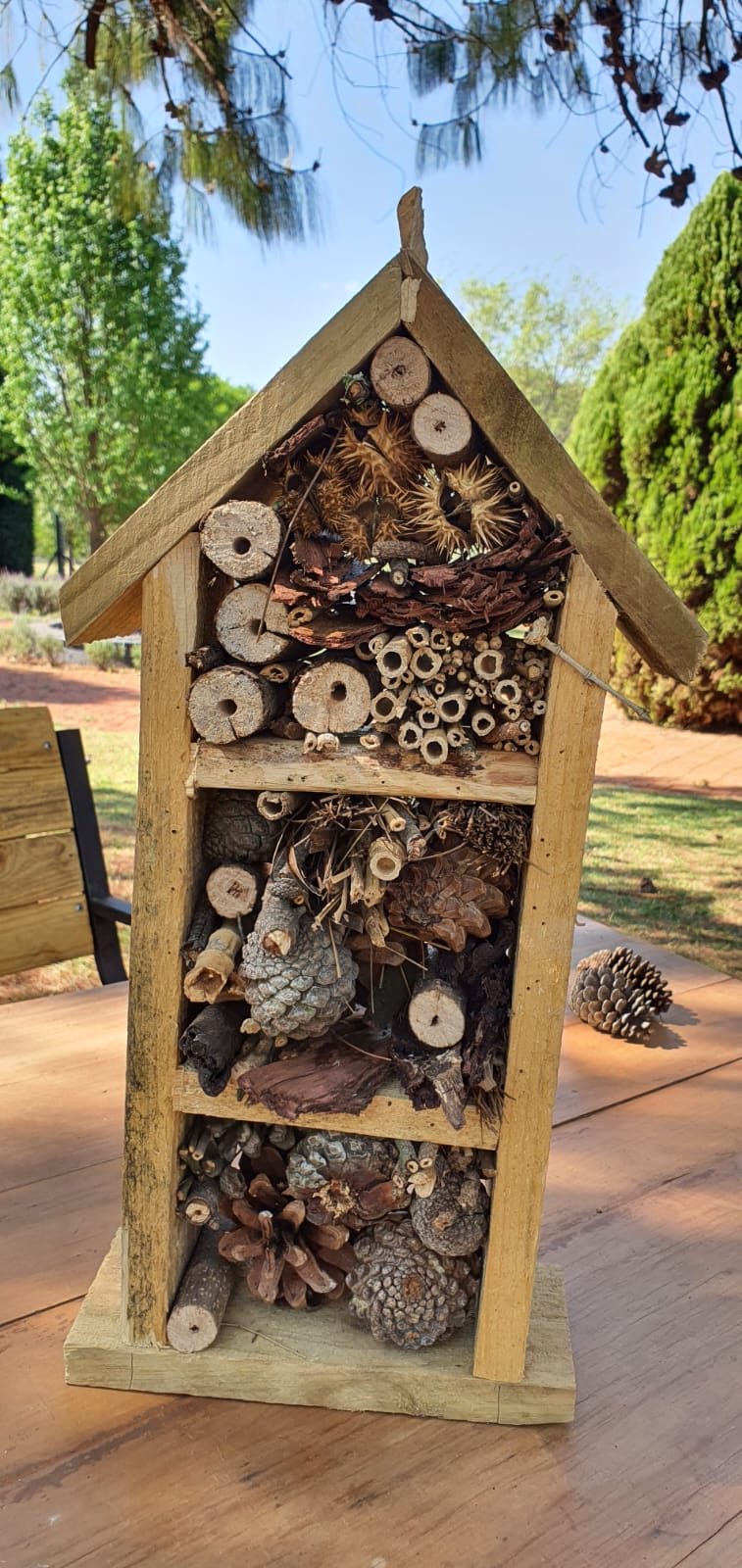
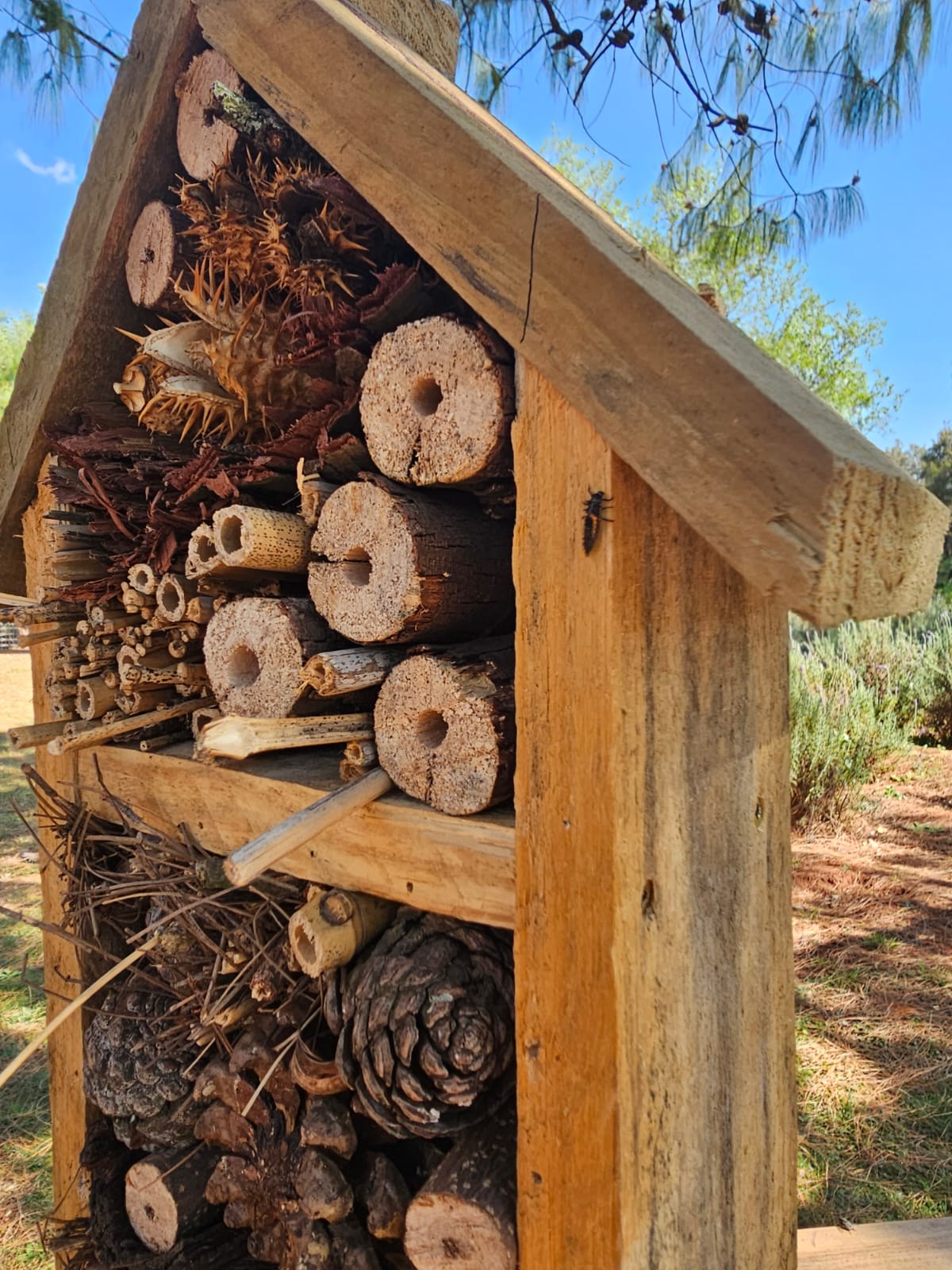
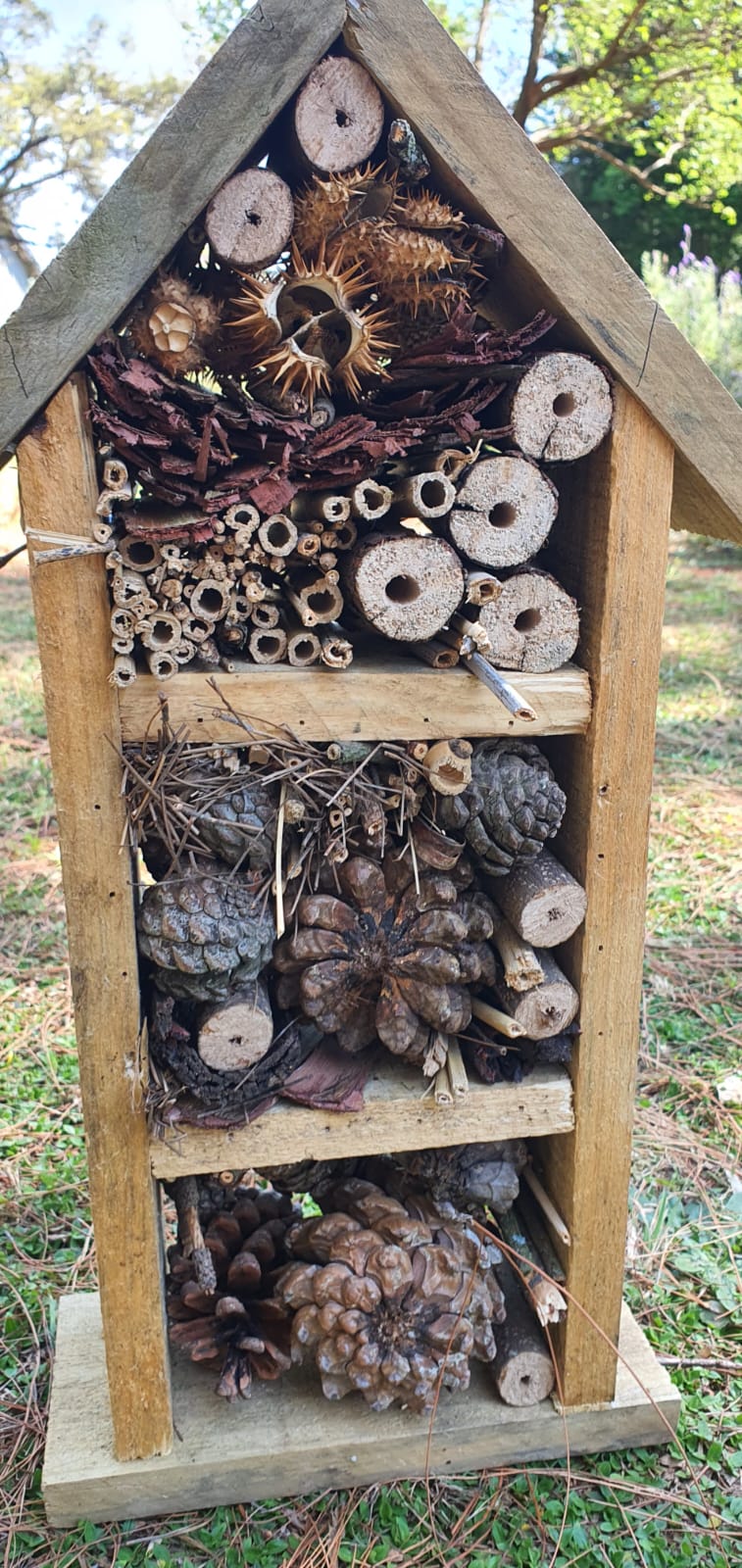
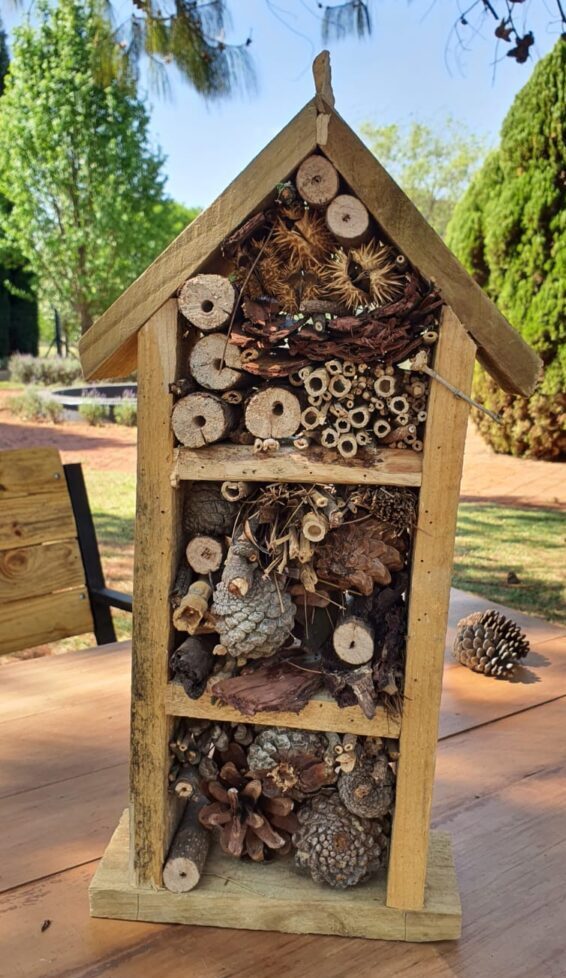
Designed to provide essential seasonal shelter for beneficial garden insects including solitary bees, ladybugs, lacewings, predatory beetles, and native pollinators. Constructed entirely without adhesives, plastics, synthetic fasteners, or chemical treatments, using only sustainably gathered local pine cones, pine needles, hollow plant stems, dried grasses, and untreated indigenous timber. Every unit is individually assembled by hand using traditional joinery methods and natural sisal twine bindings, ensuring a completely non-toxic, breathable, and ecologically safe habitat for overwintering and nesting insects.
Zero-Glue & Zero-Plastic Construction
The zero-adhesive construction philosophy guarantees that no volatile organic compounds, preservatives, or synthetic binders contaminate the insect chambers. This is critical for sensitive species such as solitary bees and parasitic wasps, which can be repelled or harmed by chemical residues found in mass-produced insect hotels.
- Natural Binding: Used exclusively for structural assembly, allowing organic materials to expand and contract naturally with seasonal humidity changes without compromising integrity.
- Untreated Hardwood Frame: Crafted from dried timber offcuts, selected for durability, moisture resistance, and minimal environmental impact.
- Raw, Unsealed Surfaces: All wood remains porous and breathable, preventing trapped moisture and ensuring a healthy microclimate for nesting insects.
Multi-Chamber Ecological Design
Filling materials are carefully curated to replicate microhabitats. Gauteng-sourced pine cones provide varied cavity sizes that accommodate different insect body dimensions and behavioral preferences. The natural overlapping scales create insulated, rain-sheltered pockets ideal for ladybug hibernation and lacewing pupation.
Pine needles and dried grass tufts are loosely packed in upper compartments to offer soft, moisture-wicking bedding for small-bodied beneficial insects. Hollow reeds, bamboo segments, and drilled timber blocks are strategically positioned to provide cylindrical nesting tunnels preferred by solitary bee species. This layered design ensures the hotel serves a wide ecological range rather than targeting a single insect type.
Why Your Garden Needs This Habitat
Modern suburban gardens frequently lack the natural debris, dead wood, and hollow stems that native insects require for survival. Habitat fragmentation and chemical pesticide use have significantly reduced beneficial insect populations across Gauteng. This handmade bug hotel actively restores ecological balance by offering a dry, insulated refuge during winter cold spells and heavy summer thunderstorms.
- Natural Pest Control: Ladybugs and lacewings emerge in spring to suppress aphid, spider mite, and whitefly infestations without chemical intervention.
- Enhanced Pollination: Solitary bees utilize narrow hollow chambers to lay eggs and provision offspring, directly increasing pollination efficiency for flowers, herbs, and vegetables.
- Biodiversity Support: Predatory ground beetles and earwigs occupy lower sections, providing additional natural control for soil-dwelling larvae and soft-bodied pests.
Placement & Installation Guide
Proper placement significantly influences colonization success and hotel longevity:
- Orientation: Mount facing southeast or east to capture gentle morning sunlight while avoiding intense afternoon heat and heavy rain exposure.
- Location: Avoid downspouts, wind tunnels, or pooling water areas. Keep clear of bright security lighting, which deters nocturnal insects.
Maintenance & Natural Aging
Maintenance requirements are minimal and ecologically appropriate. In early spring, gently brush away external spider webs, dead leaves, or wind-blown debris using a soft-bristled brush. Avoid inserting tools, water, or cleaning agents into inner chambers, as this can destroy active nests or introduce pathogens.
The hotel naturally weathers over time. Untreated wood will develop a silver-grey patina, pine cone scales will soften, and organic fillings will slowly decompose. This aging process is entirely normal, does not reduce ecological value, and confirms the absence of synthetic preservatives. In high-rainfall areas, mount under eaves or dense canopy to extend material integrity. At end of life, the entire unit can be safely composted or repurposed as natural garden mulch.
Ethical Sourcing & Craftsmanship
Every component is biodegradable, compostable, or naturally weatherable. Sourcing is transparent and localized: pine cones are collected from managed Gauteng stands, timber offcuts and natural fibers from South African. No mass-production techniques, automated assembly, or industrial processing methods are employed.
Slight variations in cone size, needle density, wood grain, and chamber arrangement are inherent to handcrafted production and serve as visual confirmation of the zero-industrial, zero-chemical commitment. Each unit is individually inspected for secure binding, appropriate chamber variety, material freshness, and absence of mold or chemical residues before dispatch.
Important Usage Clarification
This is a functional wildlife habitat shelter designed strictly for outdoor garden environments. It is not suitable for indoor display, climate-controlled rooms, or commercial insect farming. Allow natural colonization to occur over 6 to 18 months without intervention. Do not use sugar water, fruit bait, artificial pheromones, or commercial attractants, as these disrupt natural foraging patterns and can contaminate nesting chambers.
Product Specifications
| Dimensions | Approx. 45 cm (H) x 25 cm (W) x 15 cm (D) |
| Weight | 1.2 kg (dry) |
| Materials | Untreated hardwood, local pine cones & needles, hollow reeds, natural sisal twine |
| Assembly | 100% Handmade | Zero glue | Zero plastic | Zero chemicals |
| Origin | Handcrafted in Garsfontein, Pretoria East |
| Condition | New | Biodegradable | Fully Compostable at end of life |
By integrating this shelter into your landscape, you actively support chemical-free pest management, native biodiversity restoration, and ethical artisan craftsmanship in South Africa. Collection available in Garsfontein, Pretoria East. Brand: Lavender SA. Product Code: ECO-BUG-HOTEL-001.