All Products

Contact us for custom requests

Fragrant lavender Products

The Rich History of Lavender

Ancient Origins

Lavender (Lavandula) has been cherished for over 2,500 years. The name derives from the Latin lavare, meaning “to wash,” reflecting its ancient use in Roman baths, where it perfumed waters and purified spaces.
 
Historical Journey:
  • Ancient Egypt: Used in mummification processes and as a precious perfume
  • Classical Greece & Rome: Valued for bathing, cooking, and treating wounds
  • Medieval Europe: Grown in monastery gardens for medicinal purposes; used to ward off plague
  • 16th-17th Century: Became central to French and English perfume industries
  • Modern Era: Expanded into aromatherapy, culinary arts, and commercial essential oil production
 

Lavender’s African Story

While not indigenous to Africa, lavender has been successfully cultivated on the continent for over a century. South Africa’s Mediterranean climate zones—particularly the Western Cape—proved ideal for lavender cultivation. Today, lavender farms flourish from the Karoo to KwaZulu-Natal’s cooler highlands, with growing interest across East Africa’s high-altitude regions.

Can I place custom orders for specific cultivars, pot sizes, or harvest timing?

Absolutely. With sufficient advance notice (typically 8–16 weeks depending on cultivar and size), we can propagate and grow custom orders to your specifications. This includes:
  • Specific Lavandula cultivars not in standard stock
  • Custom pot sizes (from 9cm liners to 5L containers)
  • Staggered production for phased planting or retail displays
  • Specific flowering or harvest windows for events or distillation
    Contact our nursery manager early in your planning cycle to secure propagation slots.

Do you offer volume discounts or contract pricing for large-scale projects?

Yes. We provide structured discount tiers for bulk orders and offer negotiated contract pricing for ongoing supply agreements, landscape contracts, or commercial farming operations. Request a commercial quote for personalized pricing.

What are your minimum order quantities for wholesale lavender plants?

Our standard minimum wholesale order is 50 plants of a single cultivar. For mixed cultivar orders, we require a minimum of 100 plants total. We offer tiered pricing discounts for orders exceeding 500, 1,000, and 5,000 units. Contact our commercial team for a customized price list based on your volume needs.

Do you supply lavender plants year-round, or is there seasonal availability?

We maintain year-round stock of core cultivars in popular sizes. However:
  • Peak availability: Spring (Sept–Nov) and Autumn (Mar–May) offer the widest selection
  • Summer: Focus on heat-tolerant varieties and established containers
  • Winter: Limited new stock; ideal for planning and pre-ordering spring inventory
    Commercial clients are encouraged to forecast needs 3–6 months ahead for guaranteed supply.

Can you advise on cultivar selection for my specific region or project?

Yes—this is a core part of our service. Our horticultural team provides:
  • Climate and soil analysis recommendations
  • Cultivar suitability for essential oil, dried flowers, retail, or landscaping
  • Yield projections and harvest timing guidance
  • Companion planting and spacing advice for commercial blocks
    Request a free cultivar consultation when placing your first wholesale order.


What quality guarantees do you provide on wholesale plants?

We guarantee that all plants dispatched are:
  • True-to-type and correctly labelled
  • Free from visible pests and diseases at time of dispatch
  • Grown in compliance with South African nursery standards
    If plants fail to establish due to nursery-related issues (reported within 30 days with evidence), we offer replacement or credit. Note: Guarantees exclude damage from improper planting, extreme weather, or neglect.


Which lavender varieties are best for beginner gardeners in South Africa?

We recommend these hardy, forgiving cultivars:
  • ‘Munstead’ (English): Compact, early-flowering, tolerates Gauteng summers
  • ‘Hidcote’ (English): Dense habit, fragrant, excellent for borders and containers
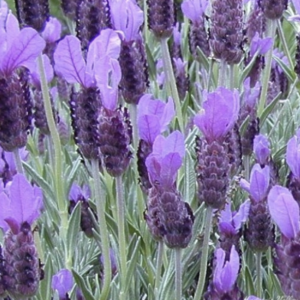
  • ‘French Lace’ (French): Long flowering period, heat-tolerant, attractive foliage
  • ‘Anouk’ (Spanish): Striking bracts, drought-tolerant once established

When is the best time to plant lavender in South Africa?

  • Timing depends on your rainfall region:
    • Winter Rainfall (Western Cape): Plant in autumn (March–May) to establish before summer
    • Summer Rainfall (Gauteng, KZN, etc.): Plant in spring (September–November) after last frost
    • Year-round (mild coastal areas): Plant any time except peak summer heat
      Avoid planting during extreme heat, heavy rain, or frost events.


What soil and site conditions does lavender need?

Lavender thrives with:
Full sun: Minimum 6–8 hours direct sunlight daily
Excellent drainage: Sandy or gravelly soil; avoid heavy clay or waterlogged areas
Air circulation: Plant in open spots, not crowded corners
Soil pH: Slightly alkaline (6.5–7.5); amend acidic soils with agricultural lime
Avoid: Rich compost, high-nitrogen fertilisers, or organic mulch touching stems

drought tolerant lavender

Which lavender varieties are best for beginner gardeners in South Africa?

We recommend these hardy, forgiving cultivars:
  • ‘Munstead’ (English): Compact, early-flowering, tolerates Gauteng summers
  • ‘Hidcote’ (English): Dense habit, fragrant, excellent for borders and containers
  • ‘French Lace’ (French): Long flowering period, heat-tolerant, attractive foliage
  • ‘Anouk’ (Spanish): Striking bracts, drought-tolerant once established

When is the best time to plant lavender in South Africa?

  • Timing depends on your rainfall region:
    • Winter Rainfall (Western Cape): Plant in autumn (March–May) to establish before summer
    • Summer Rainfall (Gauteng, KZN, etc.): Plant in spring (September–November) after last frost
    • Year-round (mild coastal areas): Plant any time except peak summer heat
      Avoid planting during extreme heat, heavy rain, or frost events.


What soil and site conditions does lavender need?

Lavender thrives with:
Full sun: Minimum 6–8 hours direct sunlight daily
Excellent drainage: Sandy or gravelly soil; avoid heavy clay or waterlogged areas
Air circulation: Plant in open spots, not crowded corners
Soil pH: Slightly alkaline (6.5–7.5); amend acidic soils with agricultural lime
Avoid: Rich compost, high-nitrogen fertilisers, or organic mulch touching stems

Which lavender varieties are best for beginner gardeners in South Africa?

We recommend these hardy, forgiving cultivars:
  • ‘Munstead’ (English): Compact, early-flowering, tolerates Gauteng summers
  • ‘Hidcote’ (English): Dense habit, fragrant, excellent for borders and containers
  • ‘French Lace’ (French): Long flowering period, heat-tolerant, attractive foliage
  • ‘Anouk’ (Spanish): Striking bracts, drought-tolerant once established

When is the best time to plant lavender in South Africa?

  • Timing depends on your rainfall region:
    • Winter Rainfall (Western Cape): Plant in autumn (March–May) to establish before summer
    • Summer Rainfall (Gauteng, KZN, etc.): Plant in spring (September–November) after last frost
    • Year-round (mild coastal areas): Plant any time except peak summer heat
      Avoid planting during extreme heat, heavy rain, or frost events.


What soil and site conditions does lavender need?

Lavender thrives with:
Full sun: Minimum 6–8 hours direct sunlight daily
Excellent drainage: Sandy or gravelly soil; avoid heavy clay or waterlogged areas
Air circulation: Plant in open spots, not crowded corners
Soil pH: Slightly alkaline (6.5–7.5); amend acidic soils with agricultural lime
Avoid: Rich compost, high-nitrogen fertilisers, or organic mulch touching stems